Italiano
 English
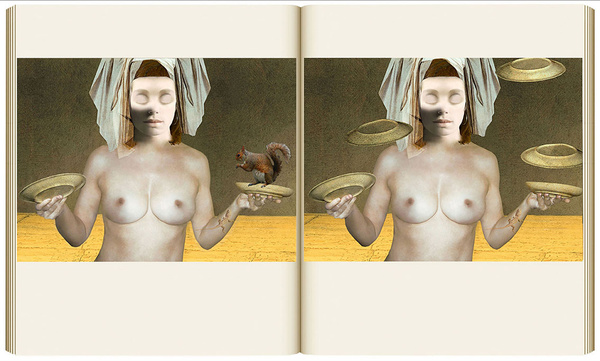
"Wo aber Gefahr ist, wächst das Rettende auch / Dove c'è pericolo cresce anche ciò che salva". Forse sta tutto qui, in queste rare parole di Hölderlin, il senso di questo lavoro. Le parole qui dette sono le parole del pericolo - del sommo pericolo che mantiene inquieta la coscienza. È la natura che parla dicendo la sua totale estraneità alla coscienza: la mancanza di ogni nesso intenzionale, il naufragio di ogni provvidenza. Parla la natura - parla e dice il suo mutismo; ascolta manifestando la sua sordità. Si rivolge ai suoi figli solo per ricordare la loro solitudine di fronte alla violenza che hanno ognora di fronte e di cui pur sono parte. È l'orizzonte della violenza - dell'inesorabile nascere e perire di tutte le cose - ciò che fa da sfondo alle parole della natura, le quali nient'altro dicono se non che nulla o nessuno giungerà a redimere questo orizzonte stesso. Violenza, povertà, solitudine, caso: queste le parole del pericolo. E queste, anche, le parole che dicono nella maniera più cruda la condizione fondamentale in cui ogni essere umano nasce - senza distinzioni: ogni distinzione è già successiva, umana troppo umana. Ma non è tutto. Abbiamo espresso il pericolo - rimane da esprimere ciò che salva. Siamo figli senza madre, abbandonati a prender parte a questa violenza cosmica: ogni volontà è già un'imposizione. Abbandonati senza la speranza che ciò che accade abbia una direzione, un senso dato da principio. Senza una provvidenza a darci sostegno. Ma che non ci sia una provvidenza; che la direzione degli eventi rimanga aperta ad un'infinità di possibili soluzioni - ciò significa unicamente che è possibile metter mano a questa direzione e guidarla, orientarla a partire da noi. È solo qui, nell'oltrepassamento di ogni provvidenza e nella solitudine più drammatica, che si apre autenticamente l'orizzonte della libertà - con la sua bellezza ma anche con la sua tremenda responsabilità. Prender posizione nei confronti degli eventi e dei conflitti, progettare una loro soluzione alternativa, un loro cambiamento: questo è il dono della pur violenta natura al figlio di Adamo. Ed ecco crescere, col pericolo, ciò che salva: la nostra autonomia, la nostra libertà. La libertà di riconoscere il conflitto alla base di ogni relazione umana - e, oltre, la libertà di porvi rimedio, di avvicinarsi all'altro incontrando la sua prospettiva. In uno: la libertà di creare una comunità autentica. Solo è l'uomo che prega il suo dio, rivolgendosi ad un orecchio che forse lo ascolta - o forse no. Meno solo - e, forse, salvato - sarà l'uomo che prega il suo dio accanto all'altro, ascoltando la preghiera dell'altro.
Domenico Andrea Virgallita
"Wo aber Gefahr ist, wächst das Rettende auch / But where danger is, there grows also that which saves." Perhaps the entire meaning of this work lies here, in these rare words by Hölderlin. The words spoken here are the words of danger—of the supreme danger that keeps the conscience restless. It is Nature speaking, declaring its total estrangement from consciousness: the absence of any intentional link, the shipwreck of all providence. Nature speaks—it speaks and declares its muteness; it listens by manifesting its deafness. It addresses its children only to remind them of their solitude in the face of the violence they constantly encounter and of which they are nonetheless a part. It is the horizon of violence—of the inexorable birth and perishing of all things—that serves as the backdrop to the words of Nature, which say nothing else but that nothing and no one will come to redeem this very horizon. Violence, poverty, solitude, chance: these are the words of danger. And these, too, are the words that express in the rawest manner the fundamental condition into which every human being is born—without distinction: every distinction is already subsequent, human, all too human.
But that is not all. We have expressed the danger—it remains to express that which saves.
We are motherless children, abandoned to take part in this cosmic violence: every will is already an imposition. Abandoned without the hope that what happens has a direction, a meaning given from the beginning. Without a providence to sustain us. Yet, the fact that there is no providence; that the direction of events remains open to an infinity of possible solutions—this means solely that it is possible to take hold of this direction and guide it, to orient it starting from ourselves. It is only here, in the surpassing of all providence and in the most dramatic solitude, that the horizon of freedom authentically opens—with its beauty, but also with its tremendous responsibility. To take a stand regarding events and conflicts, to design an alternative solution for them, a change in them: this is the gift of an otherwise violent Nature to the child of Adam. And here, along with the danger, grows that which saves: our autonomy, our freedom. The freedom to recognize the conflict at the basis of every human relationship—and, beyond that, the freedom to remedy it, to draw closer to the "other" by meeting their perspective. In one word: the freedom to create an authentic community. Alone is the man who prays to his god, addressing an ear that perhaps listens—or perhaps does not. Less alone—and, perhaps, saved—will be the man who prays to his god alongside the other, listening to the prayer of the other.
Domenico Andrea Virgallita